Notes & guides · August 8, 2026
Development photography in Toronto: how builders use it
By Laura Rossi · Toronto development and architecture photographer
A master-planned community is a promise that a neighbourhood will exist. Renderings assert it; photography proves it, in four chapters: the buildings and spaces, the art between them, the events that fill the calendar, and the people who stay.
Laura Rossi has photographed one Toronto master-planned community for close to a decade, from launch evenings to first snow on the public art. This is how that imagery actually gets used, chapter by chapter.
Chapter one: the buildings and spaces
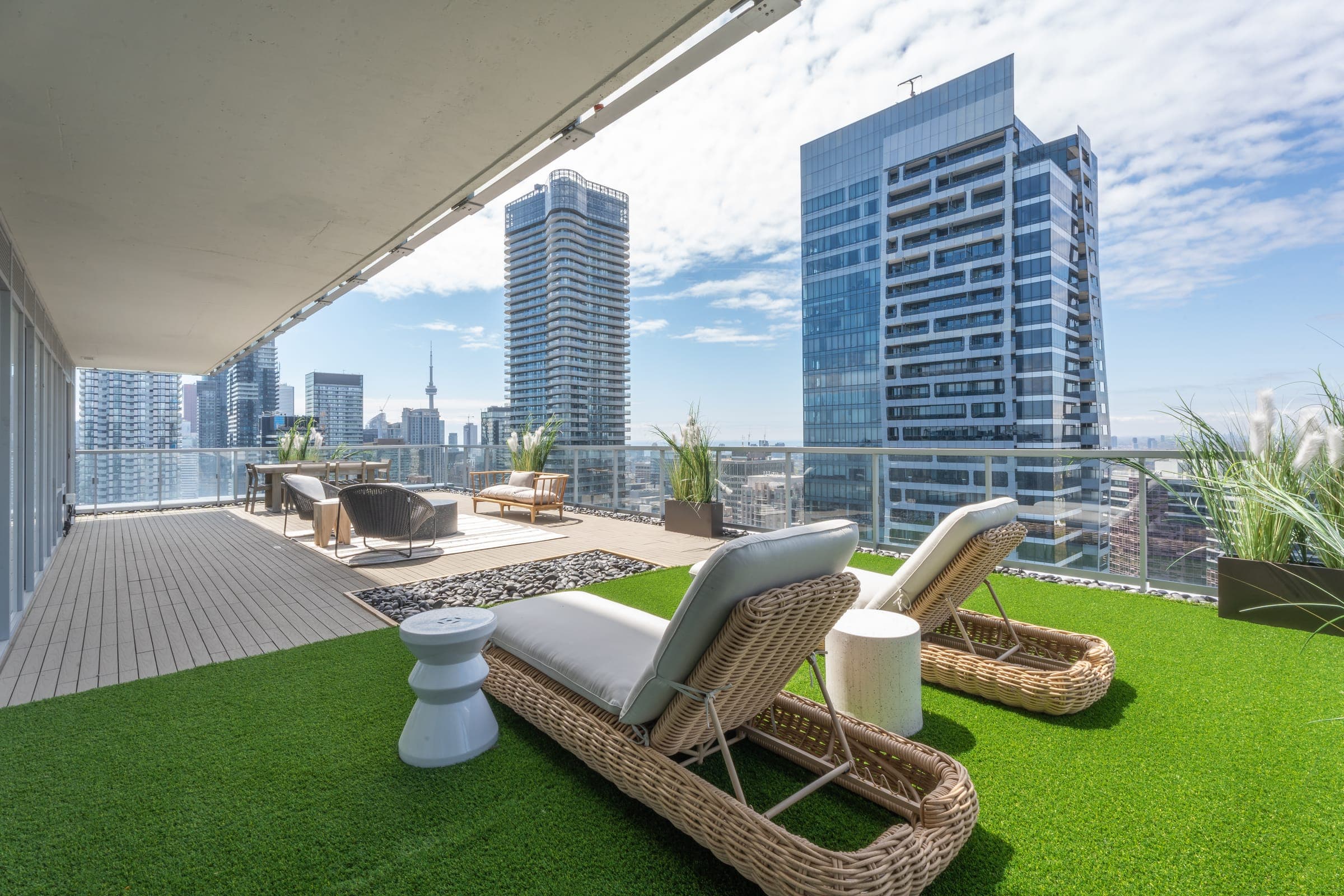
Model suites and amenity floors are where renderings stop and photography starts. Real light in a real kitchen, the sport court with the logo on the floor, the rooftop at golden hour: buyers trust photographs in a way they never trust renders, and lenders like them too.
Chapter two: the art between them
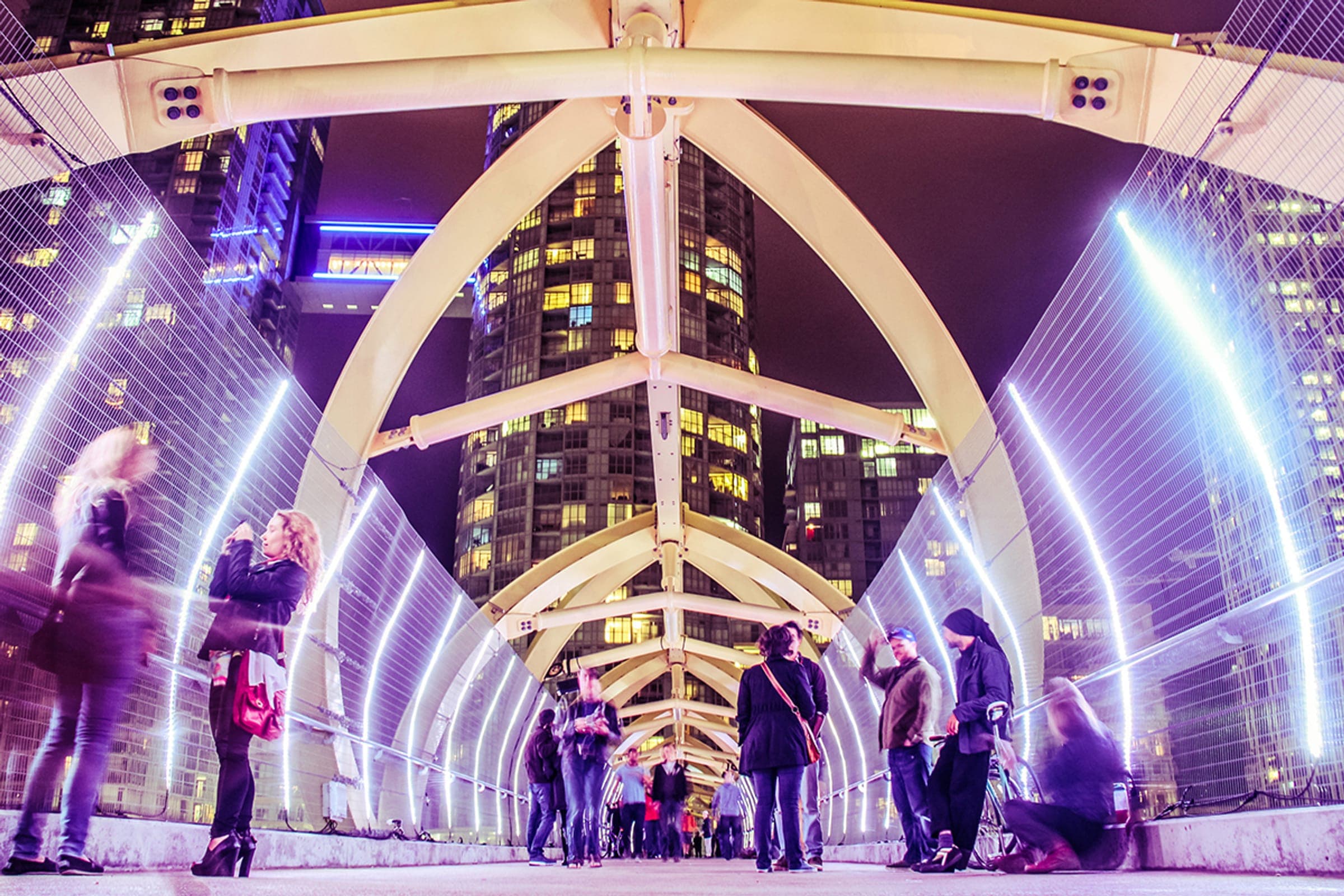
Public art is a developer's proof of intent, and it photographs in every season the towers do not. A landmark lit gold at dusk or hugged by kids in the snow says this neighbourhood was designed by people who cared, which is exactly what the sales gallery is trying to say.
Chapter three: the events that fill the calendar
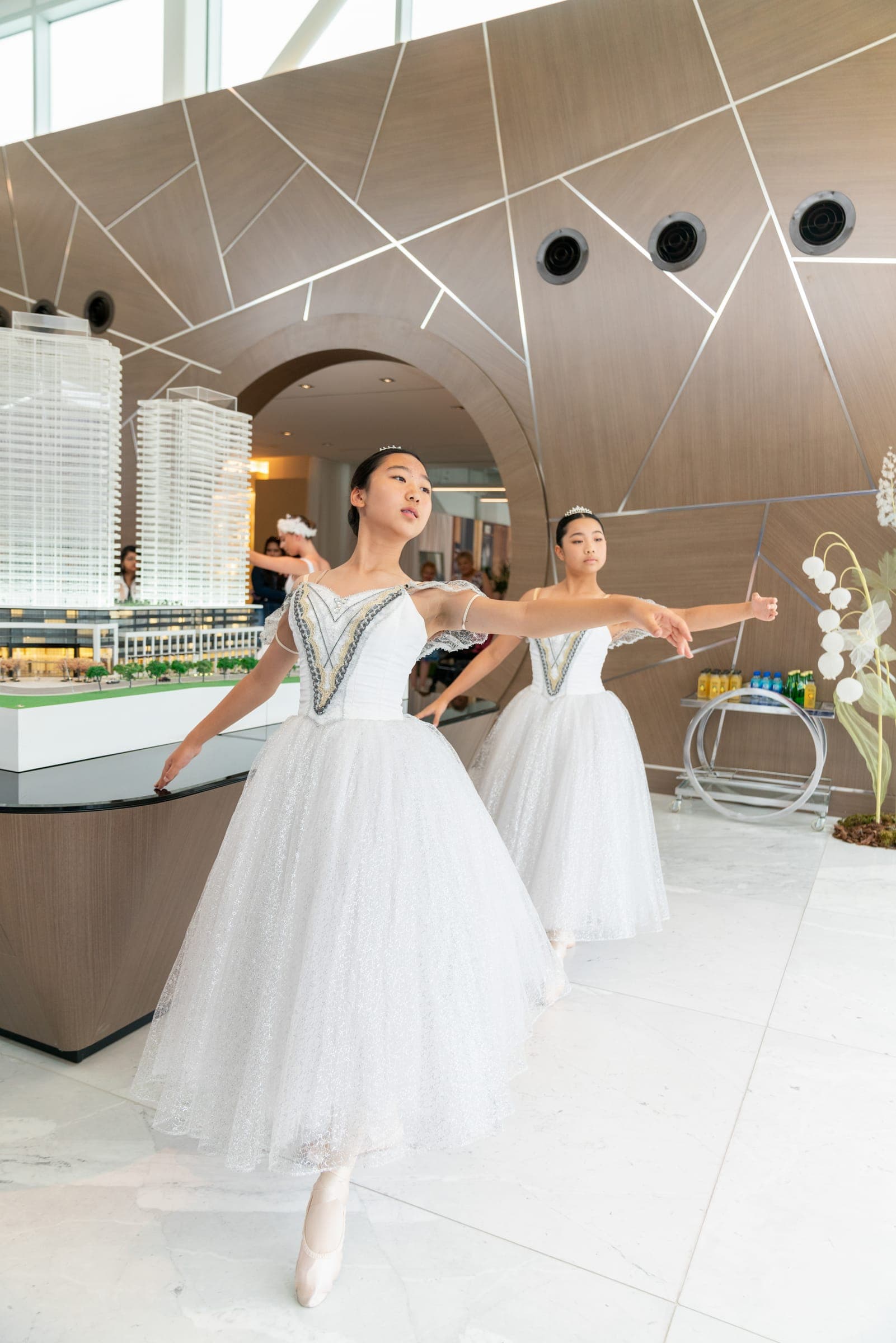
A launch event photographed well does double duty: the developer gets press and social proof the night happened, and the sales team gets a season of imagery where the project looks like a place people celebrate. Dancers in the gallery, jewellery under the right light, speeches that look like moments.
Chapter four: the people who stay
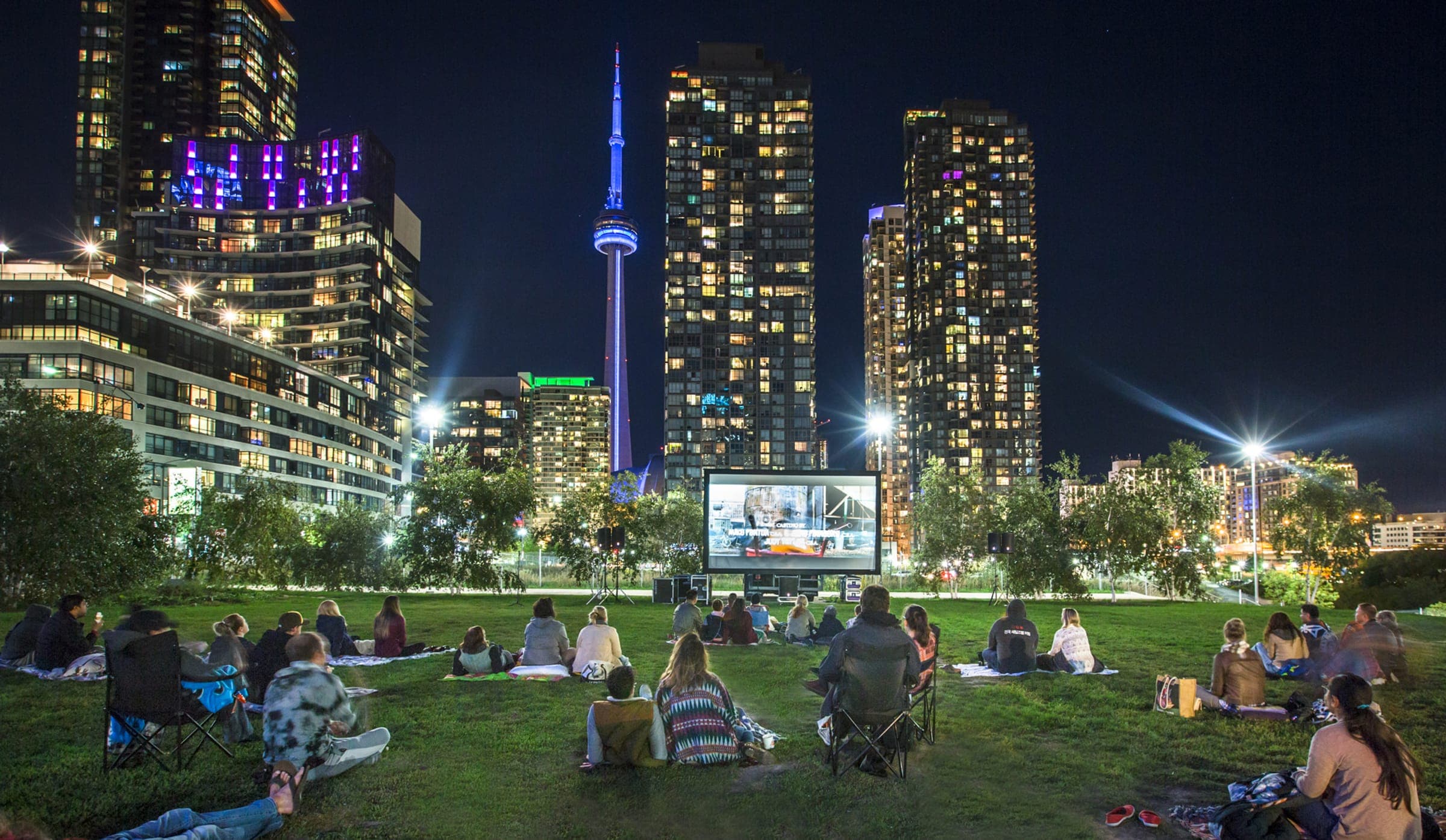
Master-planned communities sell a life, not a floor plan. Movie nights on the common, yoga under the highway deck and families in the gardens, photographed across seasons, become the proof: people live here, and they like it. This imagery compounds; a decade of it is a marketing archive no competitor can fake.
One shoot, many licenses
Development photography is usually cost-shared: developer, architect, interior designer and key suppliers each license the set for their own marketing. Everyone pays a fraction, everyone gets portfolio-grade imagery, and the licensing is written per party so rights are never fuzzy.
Quick answers
- What does development photography include?
- Launch and sales events, model suites and amenities, exteriors timed to the best light, construction milestones, and community lifestyle imagery. Most projects need all five across their sales cycle, and shooting them with one photographer keeps the visual language consistent.
- How often should a development be photographed?
- Quarterly works for most active projects: seasons change the exteriors, amenities complete in phases, and community events accumulate. Launch nights and model suite completions get dedicated shoots. A standing cadence costs less than emergency shoots before every campaign.
- Can renderings and photography mix?
- Yes, and the best pre-construction marketing does exactly that: renderings for what doesn't exist yet, photography for everything that does, especially the neighbourhood. The sooner real photography replaces renders, the more buyer trust the campaign earns.
Keep reading
Development work
Launch, lifestyle and architecture photography in Toronto
A flat rate per event and an edited gallery within five business days.